
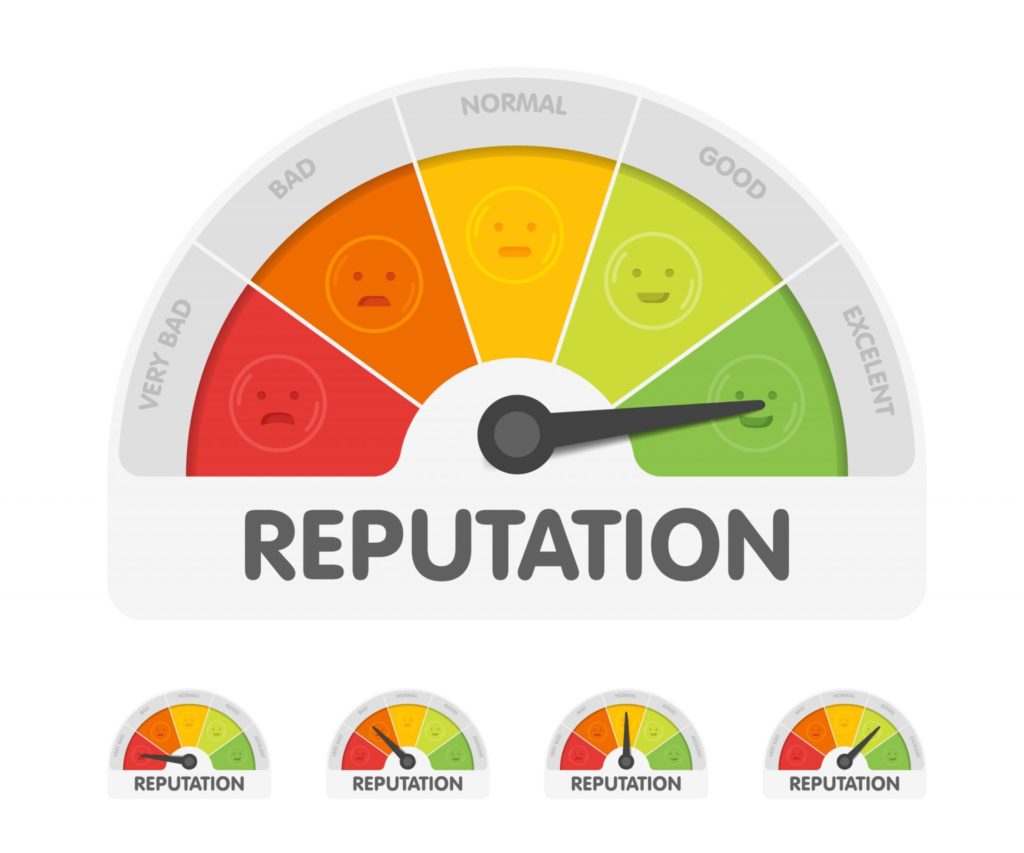
Your Google rating is a price anchor — and most business owners have no idea they're leaving money on the table because of it.
A moving company in Hialeah with 3.8 stars and a competitor sitting at 4.7 stars aren't competing on service anymore. They're competing on trust signals, and the lower-rated business loses that fight before a single phone call happens. Reputation management isn't brand fluff. It's revenue infrastructure.
Your Rating Directly Affects Your Conversion Rate
BrightLocal's consumer research consistently shows that 87% of people read online reviews before choosing a local business. More importantly, businesses below 4.0 stars see dramatically lower click-through rates from Google's local pack — meaning you're invisible even when you rank.
Run the math: if your Google Business Profile gets 400 impressions a month and you're converting at 3%, that's 12 leads. Push your rating from 3.8 to 4.6 through active reputation management, and industry data suggests conversion rates jump to 6-8%. Same traffic. Double the leads. Nothing changed except what people see when they search your name.
This is why reputation isn't a vanity metric. It's a multiplier sitting on top of every other marketing dollar you spend.
Most Businesses Are Managing Reviews Reactively — That's Backwards
The typical approach: wait for a bad review, panic, write an awkward public response, move on. That's not reputation management. That's reputation damage control.
Proactive reputation management looks like this: a med spa in Brickell sets up an automated post-appointment text through Podium or NiceJob that asks every satisfied client to leave a Google review. The request goes out 2 hours after checkout when the experience is fresh. They're generating 15-20 new reviews per month on autopilot. Meanwhile, their competitor down the street has 47 reviews and hasn't gotten a new one since March.
Volume matters. Recency matters more. Google's algorithm weights recent reviews heavily, so a business with 200 reviews but nothing in the last 6 months looks stagnant compared to one with 80 reviews and 12 from this month.
The other piece most businesses skip: responding to every review, not just the negative ones. A 5-word response to a 5-star review ("Thanks so much, glad you loved it!") signals to Google that your profile is active and engaged. It takes 30 seconds. Most businesses skip it entirely.
Negative Reviews Aren't the Problem — Ignoring Them Is
A single 1-star review from a clearly unreasonable customer won't tank your business. A pattern of unresponded 1-star reviews absolutely will.
When you respond to a negative review publicly, you're not writing to that customer. You're writing to every future customer who reads it. A measured, professional response that acknowledges the issue and offers a resolution tells potential customers: this business takes accountability. That rebuilds more trust than the original bad review destroys.
What not to do: get defensive, explain why the customer is wrong, or match their tone. A home services company in Kendall once responded to a 1-star plumbing complaint by listing everything the technician did correctly. They looked petty to every future reader. The right move was three sentences: acknowledge, apologize for the experience, invite them to call directly to resolve it.
Tools like GatherUp or Birdeye let you monitor reviews across Google, Yelp, and Facebook from one dashboard, so you're not manually checking five platforms every morning. Set up alerts. Respond within 24 hours. It becomes a 10-minute daily habit with compounding returns.
What to Do Next
- Audit your current reputation baseline: Pull your Google rating, total review count, and date of your most recent review. If your last review is older than 30 days, you have a problem worth fixing immediately.
- Set up an automated review request sequence: Tools like NiceJob (starts around $75/month) or Podium integrate with most CRMs and booking systems to send review requests automatically after a job or appointment closes.
- Create a response template library: Write 4-5 response templates for common review types — positive, neutral, and negative with specific complaints. Customize them slightly for each use so they don't feel canned.
- Track rating as a KPI: Add your Google rating and monthly review volume to whatever dashboard you're already using to track leads and revenue. Treat it like a metric, not an afterthought.
Reputation management done right isn't about chasing stars — it's about building a systematic, compounding trust asset that makes every ad you run more effective, every lead you attract more likely to close, and every dollar you spend on marketing worth more than it was yesterday. The businesses winning on Google Maps right now aren't the ones with the best service. They're the ones who figured that out first.
Want us to build this for you?
Get a free custom growth plan for your business.
Start Your Growth Plan